

Where the Amplifier Effect came from
BKP is Kallie Kurtz’s integration of her work in emergency rooms, with military operators and veterans, and with communities and people in wild places, shaped by watching where traditional care wasn’t working.
She saw high-stress professionals stay away from therapy, saw talk alone fall short for people whose stress lives in the body, and saw how little people had to use between sessions. Layering movement, nature and bilateral rhythm onto proven processing tools was her way to close those gaps. The Amplifier Effect is what she found when she put them together.
How BKP worksMore than the sum of its parts
Each pillar of BKP has its own body of research behind it. The Amplifier Effect is the idea at the center of BKP: when these components are layered together, each one strengthens the others, so outcomes improve beyond what any single piece offers.
BKP grew out of emergency rooms, where providers needed meaningful ways to engage, and out of work with military operators and veterans managing the stress, distress and trauma of their jobs.
That points to the two parts of the Amplifier Effect:
- Reach. BKP reaches people who don't usually do therapy. Stigma keeps many high-risk professionals away from care.1 Walking and working on something together feels different from sitting in an office.
- Amplify. Combining the four pillars makes the work more effective for everyone, including people already in therapy.
Research status
In a RAINE Lab quality improvement project of 51 outdoor BKP sessions, high distress (7–10) fell from 39% to 12% and good-or-excellent mood rose from 14% to 67% after 30 minutes. The project was not randomized or controlled. A larger evaluation is in peer review.
Our goal is full clinical trials, so BKP can be recognized as an evidence-based practice and covered by insurance.
RAINE Lab ProjectsPiloting Bilateral Kinetic Processing
In our 51-session pilot, sessions at high distress dropped from 39% to 12%, and good-or-excellent moods rose from 14% to 67%, in just 30 minutes outside. Read why we are reimagining behavioral health to reach the people most at risk and least served.
Read the pilot findingsThe four pillars and the science behind them
Movement
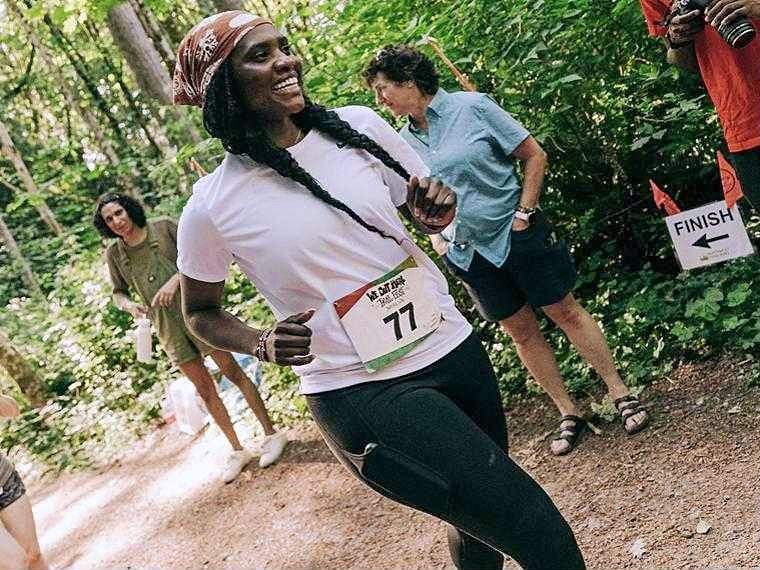
Rhythmic movement like walking, hiking, jogging or paddling engages the nervous system from the bottom up and shifts the brain from passive reflection to active processing.

Nature
Time outside quiets rumination and lowers the body's stress response, creating a calmer baseline for deeper work with less burnout.
Bilateral stimulation
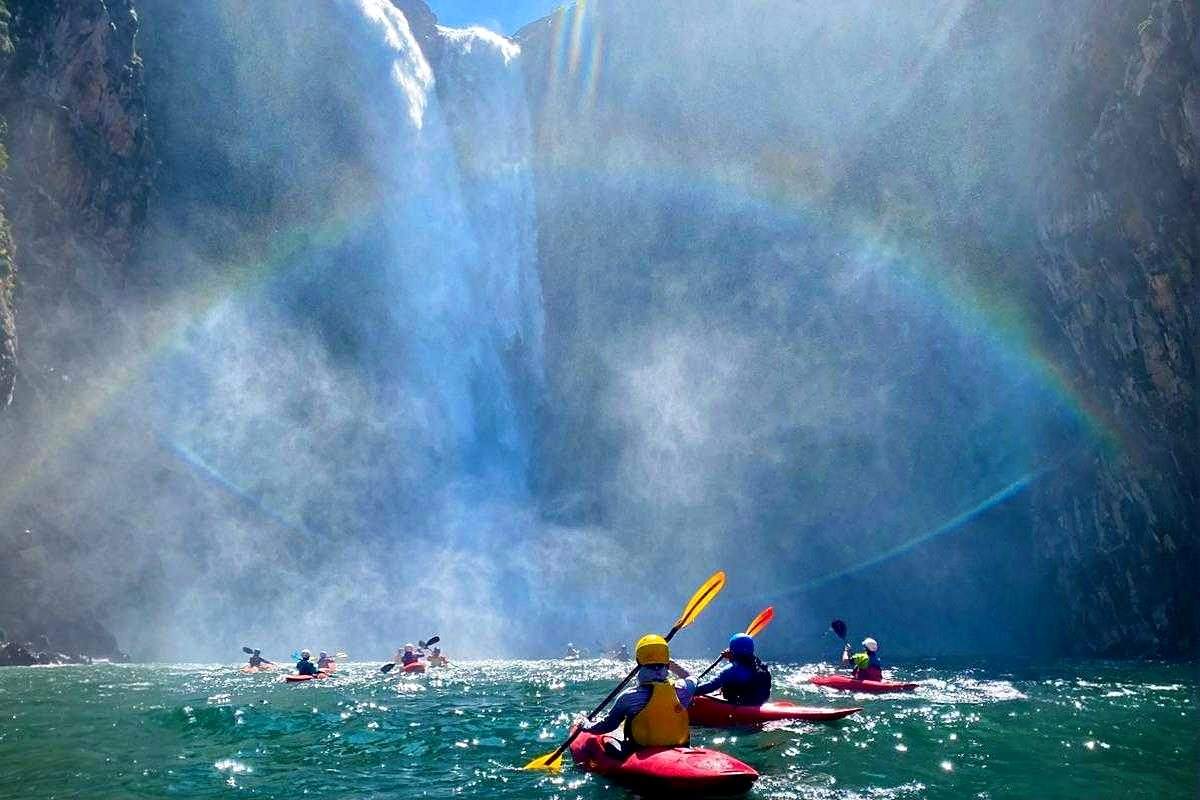
Left-right rhythms, like the alternating steps of walking or strokes of paddling, give the brain a second task while you process difficult memories and emotions, the same principle used in EMDR.

Emotion & distress processing
The key pillar. Naming and working through emotions, with a provider or through a guided pathway, turns regulation into lasting change.
Why combine them
Studies of "green exercise," physical activity in the presence of nature, already show that pairing two pillars helps. A multi-study analysis of 10 UK studies and 1,252 participants found that green exercise improved both self-esteem and mood, with the biggest gains in the first few minutes.8 BKP builds on that by adding bilateral rhythm and emotional processing.
Four BKP pathways
BKP practices are called pathways. Two are done with a trained provider, and two are self-guided, so BKP can be used any time, at 2 a.m. or 2 p.m., without waiting for a session.
1. Clinical Distress Processing
In-depth processing of distress and trauma with a trained clinician.
2. Integrated Support
BKP integrated with talk therapy, peer support or coaching.
3. Emotional Reset
A way to regulate in real time, on shift, in the field or at home.
4. Distress Processing
Working through distress on your own, using the BKP structure.
References
- Hoge, C. W., Castro, C. A., Messer, S. C., McGurk, D., Cotting, D. I., & Koffman, R. L. (2004). Combat duty in Iraq and Afghanistan, mental health problems, and barriers to care. New England Journal of Medicine, 351(1), 13–22. https://doi.org/10.1056/NEJMoa040603
- Noetel, M., Sanders, T., Gallardo-Gómez, D., et al. (2024). Effect of exercise for depression: Systematic review and network meta-analysis of randomised controlled trials. BMJ, 384, e075847. https://doi.org/10.1136/bmj-2023-075847
- Bratman, G. N., Hamilton, J. P., Hahn, K. S., Daily, G. C., & Gross, J. J. (2015). Nature experience reduces rumination and subgenual prefrontal cortex activation. PNAS, 112(28), 8567–8572. https://doi.org/10.1073/pnas.1510459112
- Hunter, M. R., Gillespie, B. W., & Chen, S. Y.-P. (2019). Urban nature experiences reduce stress in the context of daily life based on salivary biomarkers. Frontiers in Psychology, 10, 722. https://doi.org/10.3389/fpsyg.2019.00722
- Lee, C. W., & Cuijpers, P. (2013). A meta-analysis of the contribution of eye movements in processing emotional memories. Journal of Behavior Therapy and Experimental Psychiatry, 44(2), 231–239. https://doi.org/10.1016/j.jbtep.2012.11.001
- van den Hout, M. A., & Engelhard, I. M. (2012). How does EMDR work? Journal of Experimental Psychopathology, 3(5), 724–738. https://doi.org/10.5127/jep.028212
- Lieberman, M. D., Eisenberger, N. I., Crockett, M. J., Tom, S. M., Pfeifer, J. H., & Way, B. M. (2007). Putting feelings into words: Affect labeling disrupts amygdala activity in response to affective stimuli. Psychological Science, 18(5), 421–428. https://doi.org/10.1111/j.1467-9280.2007.01916.x
- Barton, J., & Pretty, J. (2010). What is the best dose of nature and green exercise for improving mental health? A multi-study analysis. Environmental Science & Technology, 44(10), 3947–3955. https://doi.org/10.1021/es903183r
Experience BKP
As therapy with our clinicians, or as training for your team.